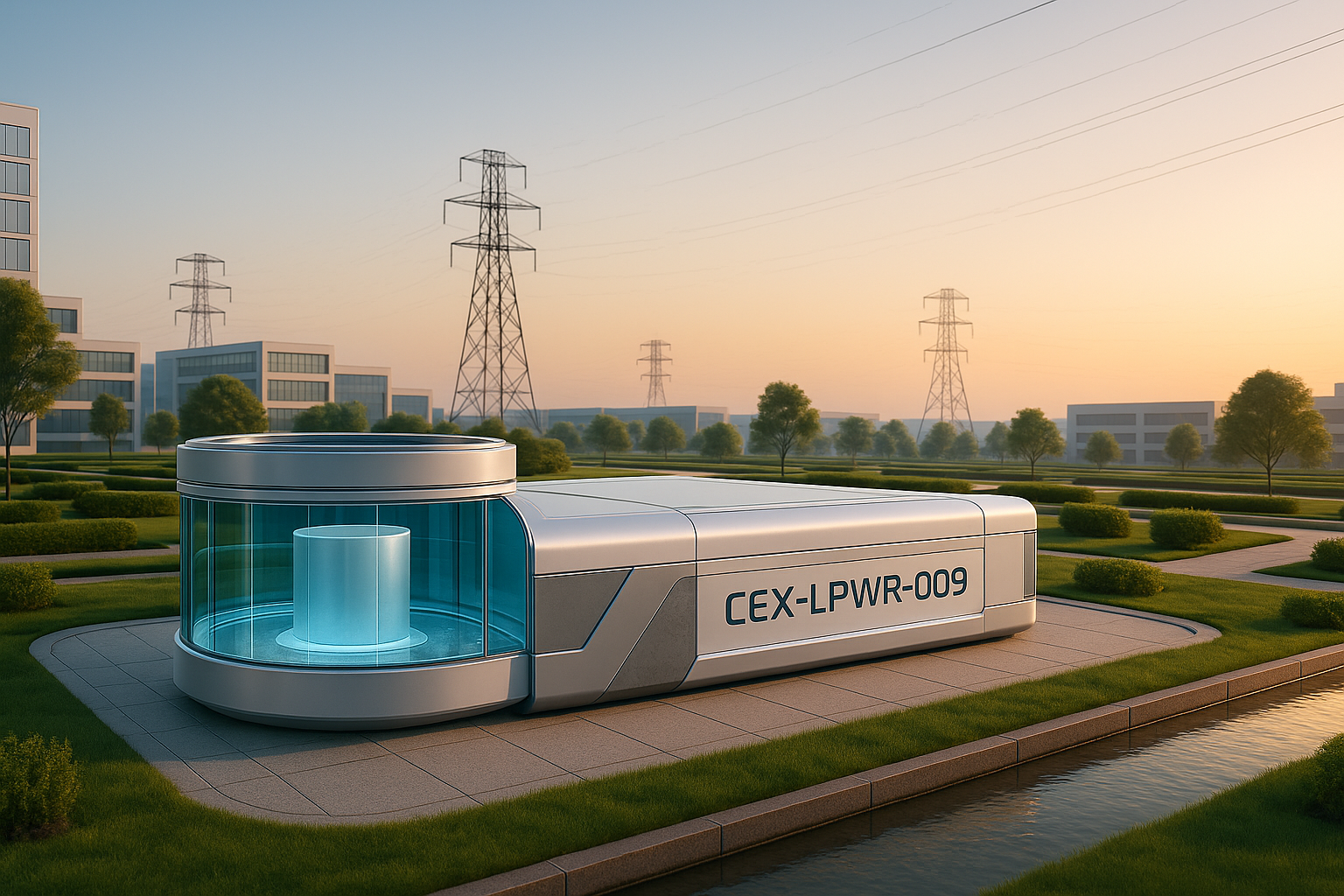
 LPWR deployed concept (deployedLPWR.png)
Clean, safe, affordable nuclear energy — designed for tomorrow's world.
CENERGY is developing the Low-Pressure Water Reactor (LPWR): a 300 MWe Small Modular Reactor that eliminates pumps, high-pressure systems and active safety machinery — replacing them with gravity, density and natural circulation. Meltdown risk removed by design.
Clean, reliable baseload power is urgent. Yet today's nuclear renaissance is held back by designs that regulators can't easily review and investors can't underwrite.
Molten salt, gas-cooled and fast-neutron technologies push important scientific frontiers and may prove vital in coming decades - but requires new materials databases, novel tech supply chains and regulatory frameworks that don't yet exist — putting utilities and financiers a decade or more from bankable megawatts.
Nuclear authorities worldwide are optimised for water-based systems. Exotic coolants demand entirely new licensing frameworks, competencies and multi-year delays.
High costs, slow development and uncertain approvals have eroded confidence in SMR startups. Capital is waiting for a pragmatic, de-risked platform.
"It must be possible to eliminate the possibility of meltdown by design, using off-the-shelf components." — Emeritus Professor Geoffrey Hewitt (1934–2019)
Density difference between cold water in the outer annulus and steam-filled chimney drives flow, exactly like water rising into a straw with air inside. No coolant pumps. No backflow.
Operating at near-atmospheric pressure (~5 bar) removes high-pressure safety injection systems, redundant active machinery and vulnerable high-pressure welding from the design entirely.
A large borated reactor water storage tank shuts down the reaction and provides cooling for 70 days with no human or computer action required. Gravity inserts shutdown rods.
The analogy of the straw: Heat the bottom of the straw and the mixture inside heats up until it bubbles to steam at some height above the core; it becomes less dense than the water outside, so the surrounding denser, higher-pressure water pushes it up the straw - endlessly. In the LPWR, the reactor core is that heat source at the bottom: the same density difference circulates the whole plant, forever, without a single moving part.
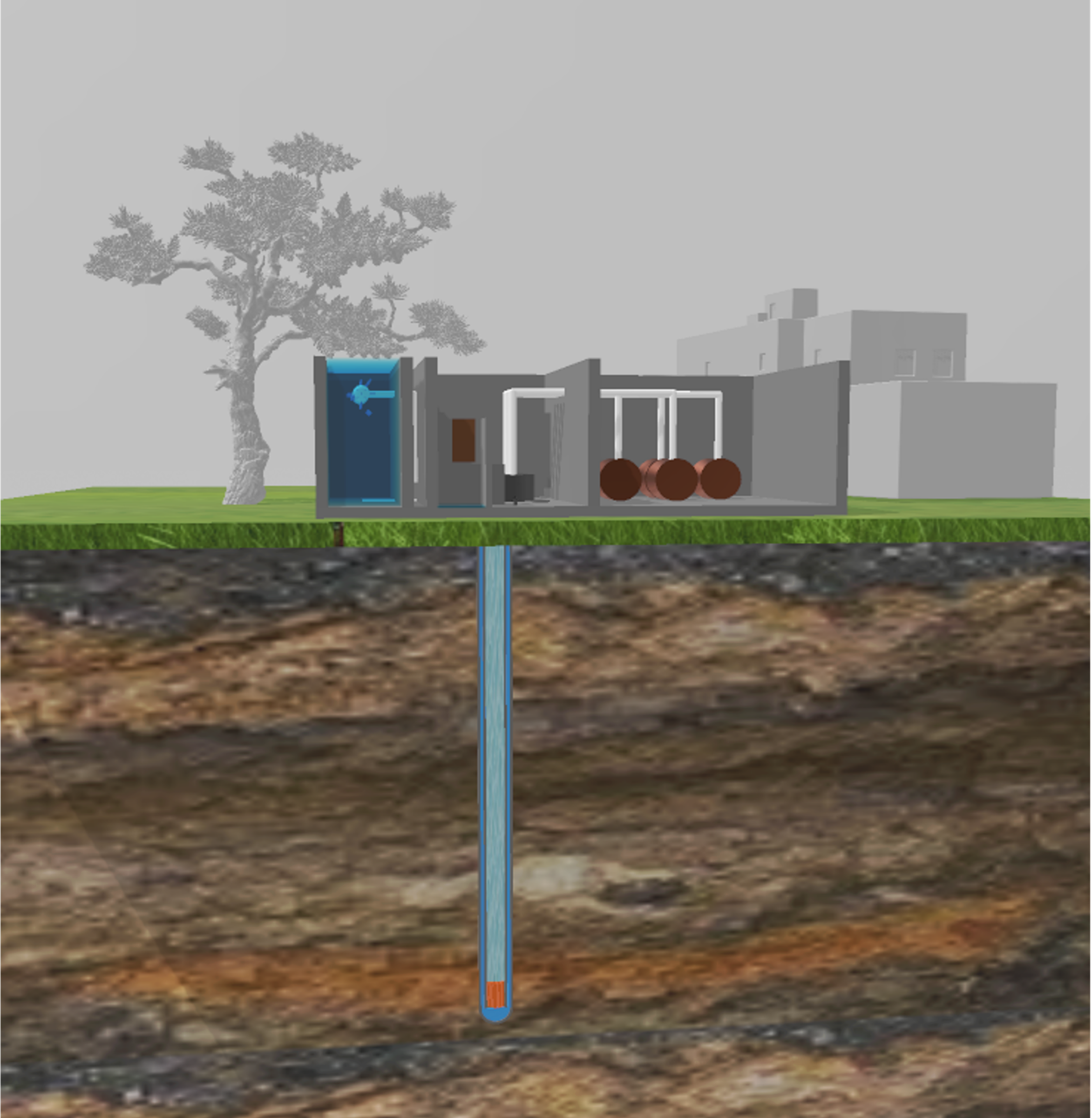
The published design concept. High-density cold water occupies the outer annulus and is pulled down by gravity; the core heats it to near-saturation, flashing to steam in the riser chimney. The saturated steam is dried at ground level and sent straight to low-pressure turbines — one vessel, one loop, no steam generators, no pressuriser.
| Feature | Other SMRs / Gen-IV | CENERGY LPWR |
|---|---|---|
| Coolant system | High-pressure or exotic coolants | Water, near-atmospheric pressure (~5 bar) |
| Core circulation | Forced circulation, pumps | Natural, passive — no pumps |
| Fuel type | Novel or unproven fuels | Standard UO₂, global supply chain |
| Capital cost ($/kW) | $8,000 – $10,000+ (FOAK) | $3,000 – $3,500 target |
| Deployment time | Typically 8–12 years (FOAK-driven) | Faster — modular, repeatable builds with established global supply manufacturers |
| Regulatory alignment | Low — new frameworks required | High — existing light-water precedent |
| Supply chain readiness | Requires new infrastructure | Compatible with existing industry |
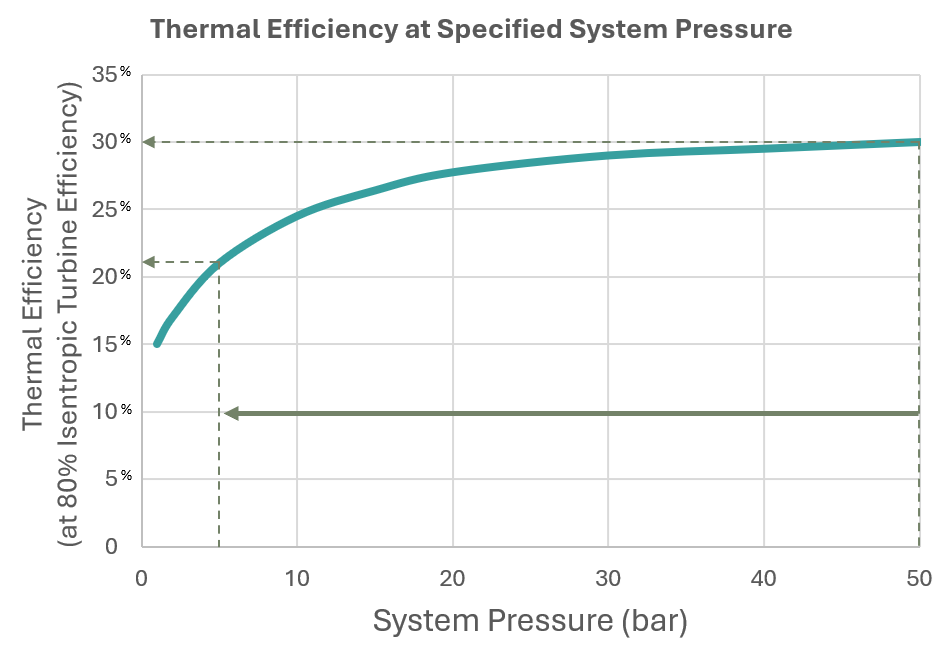
Every thermal plant chases efficiency — but efficiency only matters when fuel is expensive. Uranium is abundant, so buying a few extra percentage points of thermal efficiency with resource-intensive high-pressure complexity has rapidly diminishing returns. Dropping from a 50 bar system to a 5 bar costs less than one-third of the thermal efficiency — and the safety and cost gains are enormous.
Low-pressure, density-driven natural circulation removes the systems that dominate conventional reactor cost — and their failure pathways:
Fossil fuels are being retired; renewables are land-intensive and weather-dependent; conventional nuclear is dense and reliable but slow and costly. The unmet need is a safe, fast, scalable way to deliver zero-carbon baseload — without rebuilding the grid.
Facing fossil retirement mandates, they need dispatchable zero-carbon baseload. A fleet of five 300 MW LPWR modules can reach first revenue in ~7 years — versus a single 1,500 MW conventional plant taking far longer.
24/7 uptime demands that wind and solar cannot meet alone. LPWR's modular siting delivers dense, clean power exactly where compute grows fastest.
Clean heat and power for industry, ports and remote regions — built with current industrial supply chains, no exotic materials required.
Same 1,500 MW — but the fleet earns revenue from Year 3.
Priority filed 3 August 2021 (WIPO App. No. 21189257). European Patent EP4381525 granted 22 October 2025, now entering national validation across >39 countries under PCT and EPC schemes — including the UK, US, EU, Canada, China, Japan, Korea, India, Indonesia and South Africa.
The core LPWR patent, covering the low-pressure natural-circulation reactor architecture claimed down to >10,000 kg/s flow and 6–15 bar saturated operation. Entering national validation across Europe.
Examination underway or granted in major markets: US (US2024/0339230), China (CN118202428), Eurasia, Australia (AU2022324667), Canada (CA3227898), Japan, Korea, India, Indonesia, Nigeria, Saudi Arabia, South Africa.
Filing strategy protects the design end-to-end, from reactor physics to control systems - securing first-mover advantage for partners and investors.
Thermalhydraulics modelling (University of Manchester), fuel & core design (Bangor University), reactor physics (Cambridge), structural integrity (Imperial College London) and Malaysia's first dedicated SMR demonstration test rig at Universiti Teknologi PETRONAS - who are developing grant application documentation.
Front-End Engineering Design, Control Rod Drive Mechanism development and full engineering blueprint — de-risking build cost before any steel is cut.
UK ONR Generic Design Assessment and US NRC Standard Design Approval, with Canada's CNSC SMR Action Plan as a parallel fast-track path. Malaysia — test-rig location and future regulatory alignment partner. Founders bring direct experience from the Hinkley Point C GDA.
Repeatable modular units for utilities, data centres and industrial hubs across the EU, Asia and Africa.
LPWR's risk strategy is rooted in pragmatism -> de-risking early through validation, regulatory alignment and real-world deployment logic.
Partnering with world-class research institutions — Manchester, Bangor, Cambridge, Imperial and Uni Teknologi Petronas — for staged experimental validation before any commercial commitment.
Aligned with existing light-water frameworks in the UK, US, CA and EU. No new materials databases or first-of-a-kind regulatory learning curves required.
No exotic materials: standard UO₂ fuel, proven PWR-type assemblies and commercial-grade fabrication from established global manufacturers.

PhD Nuclear Thermalhydraulics, Imperial College London (Khazanah-funded) — thesis on the LPWR itself. MSc Nuclear Science & Technology, Manchester (Chevening Scholar). 25+ years in the energy sector starting with Tenaga Nasional and later with MESTECC's MESI 2.0 programme shaping electricity market reform; in 2024 advising MyPOWER Corporation on nuclear safety and infrastructure.

40+ years in nuclear safety. UK Licensing Manager at AREVA (2010–2016), instrumental in securing Hinkley Point C approval via the UK Generic Design Assessment. Senior Research Fellow then Visiting Fellow at Imperial College, where he supervised the PhD project that produced the LPWR concept. 30+ published papers; contributor to Three Mile Island and Chernobyl investigations.

MBA, University of Sheffield. Leads capital strategy, international IP coordination and investor relations. Background spanning operations management, project delivery and business development across corporate and sustainability-focused enterprises.
 Join our team
A small container of height 15 cm is made of a metal sheet in the form of a frustum of a cone, with radii of its lower end 5 cm and upper end 10 cm. If filled with teh tarik bought at RM4 per litre, what is the total value?
V = (πh / 3)(R² + Rr + r²) · and remember 1 L = 1,000 cm³.If this kind of problem-solving excites you, write to us — and share with us your dreams. We'd love to have you on our journey!
Beyond the LPWR, CENERGY advises national programmes and companies entering nuclear — from strategy and regulatory readiness to qualifying conventional-industry manpower and suppliers for first nuclear work.
SMR concepts, thermal-hydraulics, safety engineering and licensing strategy — the same depth we apply to the LPWR.
Roadmaps, policy support, feasibility studies, site selection and power-system assessments. Our team contributed technical evaluation and assessment to MyPOWER Corp for Malaysia's potential nuclear power programme.
Commercial structuring, stakeholder engagement and deployment pathways — turning policy intent into programmes that actually reach a concrete pour.
We help companies move people from conventional industries — oil & gas, marine, power generation, heavy manufacturing — into nuclear-qualified roles: welding and NDT qualification (ASME Section IX / ISO 9606; ASNT SNT-TC-1A, PCN and ISO 9712 Level II), AWS certified weld inspection, QA/QC systems training (EN 9100 / NQA-1 principles), and HSE culture for nuclear sites.
Vendor development into nuclear supply chains: material traceability, documentation standards (NCA NQA-1 / 10 CFR 50 Appendix B), ASME Section III fabrication requirements, audit readiness and local-content programmes that keep value in-country.
GDA preparation, safety-case structuring and licensing gap analysis — grounded in firsthand experience of the Hinkley Point C Generic Design Assessment.
Completion of the LPWR demonstration test rig is expected to establish an indicative project value of approximately USD 15 million. Subsequent commercial deployment would generate design licensing revenues of USD 25–40 million per reactor unit, with additional long-term value arising from engineering services, technical support contracts, intellectual property royalties, and other recurring revenue streams.
Confirm physics, validate safety, secure vendor quotes — the raise on the table today.
FEED and detailed design; construction costing confirmed before steel is cut.
Generic Design Assessment (UK) and parallel certification in target markets.
We are looking for strategic investors in clean energy and infrastructure, angels with nuclear or energy domain expertise, institutions backing pragmatic SMR solutions, and commercial partners for siting, engineering, supply chain and scale-up.
We welcome a conversation with those who believe that together we can deliver a practical, safe and bankable nuclear option. Use the form to reach us — investor briefings available on request.
Include both email and phone if you can — we'll reply on whichever channel suits you best.